Just concluded the XXIV IPOS Congress, where I presented a study on severe mental disorders in cancer patients. The presentation was part of a symposium, chaired by Prof. Gil Goldzweig, on communication and intersubjectivity in underserved populations.
I discussed challenges and the (poorly explored) state of the art of studies on the comorbidity between severe mental disorders and cancer. Below a brief video-summary of the slides.
How to treat clinical manifestations of schizotypy? In an upcoming book, we try to anwser to this fascinating and elusive question. Paul H. Lysaker and I are the co-editors of a book to publish by Springer. The manuscript is finally in the hands of the production editor.
In the last year, Paul and I have involved twenty diverse teams of researchers and clinicians to address this question. Indeed, schizotypy represents a unique paradox. On one hand, we know that one out of ten persons presents schizotypal traits. On the other hand, there are no guidelines for treating schizotypal personality disorder or the clinical onset of schizotypal traits.
We don’t want to spoil the new book, but Paul and I have organized the contributions into three sections: (i) an introductory section discussing schizotypy as a feature of personality and psychopathology; (ii) a section dealing with 5 transdiagnostic processes relevant to schizotypy (attachment, mentalization, metacognition, self-criticism, interpersonal criticism); (iii) a concluding (and also the most extensive) section where numerous therapeutic approaches to schizotypy are presented.
To our knowledge this is the first book adressing clinical conceptualization and treatment of schizotypy, Despite several amazing books and papers have been puslished about, limited attention has been paid to the previous question, that is: How to treat clinical manifestations of schizotypy?
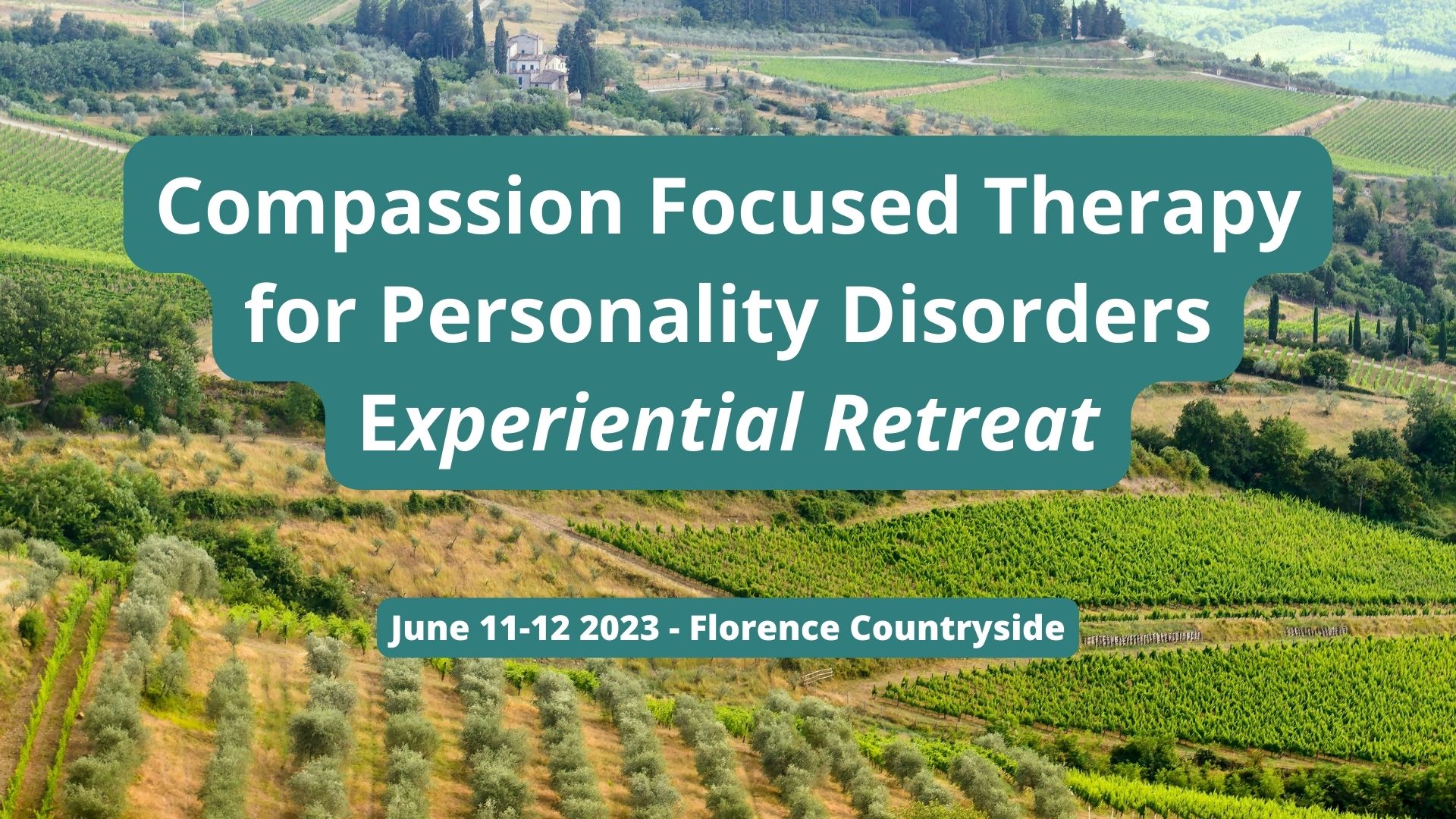
Just concluded the first edition of a retreat for mental health professionals interested in applying Compassion Focused Therapy (CFT) in personality disorders.
Despite CFT is genuinely transdiagnostic and usuful in targeting maladpative interpersonal schemas, little is known about its application in treating those struggling with personality disorders.
Thus, I organized this retreat where to present an evolutionary model of conceptualization of personality disorders and those tecniques that I found extremely useful when working with personality disorders. I also presented my work in this field with a specific focus on schizotypal, perfectionistic, narcisistic and borderline traits.
The retreat was located in an amazing center near Florence, surrounded by woods and vineyards! For two days, about 30 partecipants worked on mindful compassion, chairwork imagery, and so on.
For those interested in, here’s my presenation at Evolution 2023, the international congress on the theory of evolution. Martin Brüne and I have recently reviewed existing evolutionary studies on schizotypy and then summarized them for this speech!
Online a paper about a therapy for adolescents with autism and extraordinary skills. The research has been just published by the Journal of Contemporary Psychotherapy and presents a two cases series.
In this study we tested an evolutionarily oriented therapy for those with the so-called savant syndrome, that is the presence of extraordinary skills usually in conjunction with autistic traits. Thus, we recruited two adolescents with this syndrome and offered a 6-month therapy (plus 1-month follow-up).
The proposed therapy is an adaptation of Evolutionary Systems Therapy for Schizotypy, that is an integration of evolutionary psychopathology, metacognitively oriented therapy and compassion focused therapy. This treatment has been originally tested with persons with schizotypal o schizoid traits.
The collected results are promising. Indeed, both the adolescents showed a reliable change in symptomatology and in metacognition, that is the former decreased and the letter increased.
Future studies will hopefully confirm if and how our therapy for autism and extraordinary skills works!
Cheli, S. & Cavalletti, V. (2023). An Evolutionarily Oriented Therapy for Autistic Adolescents with Extraordinary Skills: A Two-Case Series. Journal of Contemporary Psychotherapy. https://link.springer.com/article/10.1007/s10879-023-09586-7
In a cases series with five adolescents we tested a treatment for adolescents with schizotypal traits. The intervention was previously designed and tested with adults, namely Evolutionary Systems Therapy for Schizotypy (ESTS).
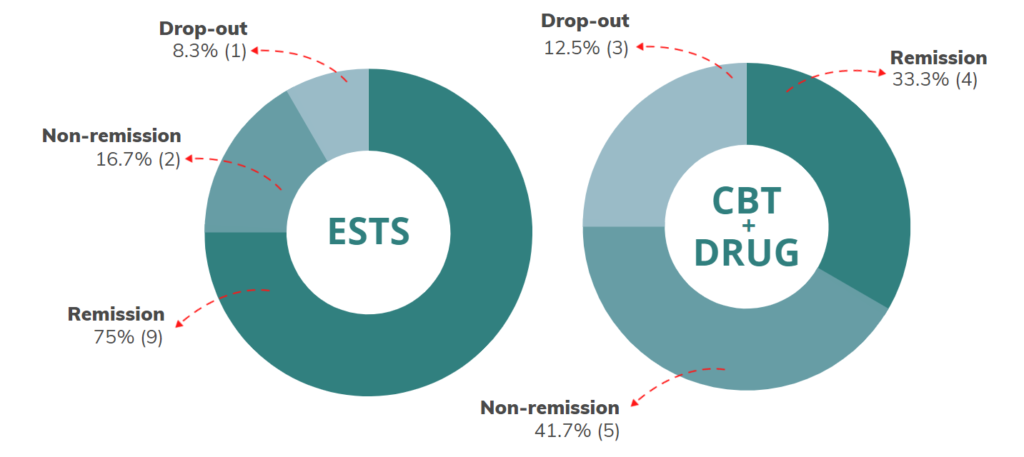
ESTS is an integrative form of psychotherapy that comprises an evolutionarily based conceptualization with compassion focused and metacognitvely oritented approaches. We recently published the findings of a randomized controlled trial where we showed promising results. 75% of patients remitted from diagnosis and drop-out rates was below 10%.
In this new cases series we suggest how ESTS may be a feasible treatment for adolescents with schizotypal traits. All the partecipants concluded the study and the rate of missing sessions was below 10%. Moreover, 4 out of 5 patients remitted from diagnosis at the end of the schedule 6-month treatment, 1 out of 5 after an extended 9-month intervention.
A post-hoc interview showed how the adolescents described the intervention as effective, substainable and consistent with their goals. By considering how limited informat we have about effective treatments for adolescents with personality pathology (almost nothing for those struggling with schizotypal traits), we are really excited by these findings. Despite the preliminary nature of the study, the proposed model is elegible for larger sample size studies.
Simone Cheli, Gil Goldzweig, Paul H. Lysaker, Francesca Chiarello, Courtney Wiesepape & Veronica Cavalletti (2023) An evolutionarily informed therapy for adolescents with prominent schizotypal traits: a pilot five case series, Psychosis, DOI: 10.1080/17522439.2023.2199325
A team of international researchers I’m a part of, just concluded and submitted a large meta-analysis on the effectiveness of Compassion Focused Therapy – CFT. CFT is an an evolutionarily oriented psychotherapy developed by Paul Gilbert (one of the co-author of the study). The main focus of the interventions is the soothing system, a mammalian affect regulation system that is usually triggered by social safeness. In humans, this system may be impaired by either external (eg interpersonal criticism) or internal (eg self-criticism) threats.
In this meta-analysis we screened a large number of studies and explored the effectiveness of CFT in improving negative and positive mental health outcomes. Our team, led by Nicola Petrocchi and Cristina Ottaviani, reported a moderate to large effect size in clinical and non-clinical samples.
We also found a relevant heterogeneity, urging scholars in CFT to outline larger-scale higher quality randomized controlled trial. That said, the final analysis of our meta-analysis included 47 RCTs and 7875 partecipants, suggesting how CFT may be considered an effective intervention for a variety of symptoms and disorders.
Fingers crossed while waiting reviwers’ feedbacks!
Our paper on the randomized controlled trial where we compared ESTS (Evolutionary Systems Therapy for Schizotypy) versus a combination of CBT and drugs is out! Finally, BMC Psychiatry has published it as an open access article.
The trial (ESTS versus CBT: Randomized Trial) reported very encouraging findings! Despite the pilot nature of the study, ESTS (withoud medication) showed at least a non-inferiority in respect to a good psychiatric managment comprising cognitive therapy for personality disorders and psychopharmacological treatment. ESTS reported drop-out rates below 10% and remission from diagnosis in 3 out of 4 patients.
I previously posted updates about the trial, the theoretical foundation of ESTS, and a new confermatory study we are starting in short, but this is very thrilling news! We can now consider ESTS a treatment that is elegible to test as therapy for schizotypy.
First, ESTS is rooted on a specific theoretical model. The clinical manifestations of schizotypy would be the failure in socializing one’s own openness to experience and introversion, leading to an impairment in metacognition and self-soothing.
Second, ESTS is based on a specific protocol comprising four modules: sharing, subjective systemts, intersubjective systems, and consolidation. The first is aimed to share the conceptualization and work on therapeutic alliance, the second and third to promote a mind-body awareness of subjective and interusbjective experience respectively, and the fourth to prevent relapses.
Finaly, a new RCT will compare ESTS with CBT without any mandatory treatment. People will be allowed to access to psychopharmacotherpy, but this will be considered as an exclusion criterion from the study (regardless of the arm they are randomized to)
Below you can find a video-summary of the study!
Cheli, S., Cavalletti, V., Lysaker, P. H., Dimaggio, D., Petrocchi, N., Chiarello, F., Enzo, C., Velicogna, F., Mancini, F., & Goldzweig, G. (2023). A pilot randomized controlled trial comparing a novel compassion and metacognition approach for schizotypal personality disorder with a combination of cognitive therapy and psychopharmacological treatment. BMC Psychiatry, https://doi.org/10.1186/s12888-023-04610-5
The new website of the Metacognitively Oriented Treatments International Society (MOTIS) has been released. MOTIS is a scientific society aimed to share those interventions that are focused on metacognition.
Metacognition refers to the capacity to understand one’s own mental states and the ones of the others. This emerging and nuanced function is one of the more distinctive features of humanity. Moreover, it is a transdiagnostic and general factor to understand psychopahtology and to orient psychotherapy.
The idea of a society was discussed a few years ago by the actual members of the board of diarector, and now it is a reality! As the secretary of MOTIS I encourage all the scholars and clinicians interested in metacognition to join us. The 2023 membershi is for free!
We are finally ready to start the replication study about Evolutionary Systems Therapy for Schizotypy (ESTS). ESTS is an integrative form of psychotherapy that is specifically tailored on schizotypal traits.
Last year we concluded the first randomized controlled trial (RCT) showing promising results about its effectiveness. Now we have registered the new RCT aimed to confirm these findings and question the limitations we highlighted. Indeed, we are going to increase the sample size of those sperimentally treated with ESTS, and will use cognitive behavioral therapy (CBT) e as an active treatment without any mandatory drug.
In the first RCT the control group accessed to a good psychiatric management comprising of CBT and psychopharnacological drugs. During the post-hoc analysis the interviews indicated how the control group may have been biased by a more stigmatizing approach along the treatment plan. On the one hand, we suppose how ESTS may benefit from an evolutionarily oriented and non-stigmatizing approach to conceptualization. On the other hand, the mandatory drug may have been perceived as stigmatizing or patronizing.
Thus, the new RCT will compare ESTS with CBT without any mandatory treatment. People will be allowed to access to psychopharmacotherpy, but this will be considered as an exclusion criterion from the study (regardless of the arm they are randomized to).
Another interesting difference between the new and the previous RCT will be the secondary outcomes. Despite we collected cases series about feasibility of ESTS in treating different features related to schizotypy, we want to explore the differential effectiveness on psychoticism and detachment. That is, we want to explore the differential effect of ESTS on diverse features of schizotypy, from oddity and disorganization to emotional and social withdrawal.